Nantucket Looms
Forget-Me-Not: Why Sailors’ Valentines Will Always Have Our Heart


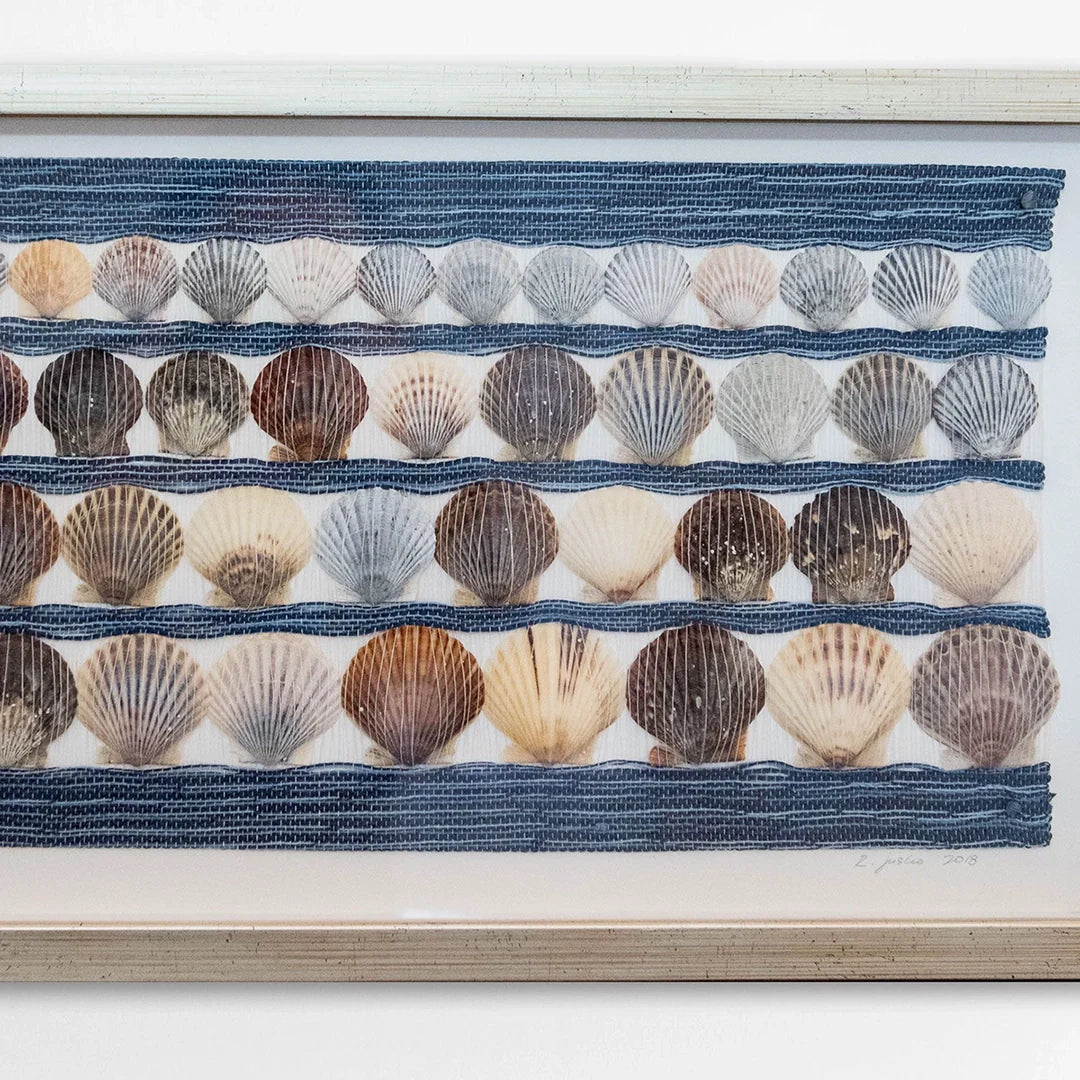
There is a special delight that comes with beachcombing. Walk along any of the 80 miles of open, accessible coastline along Nantucket, and you’re sure to find a treasure or two nestled along the tideline. Many visitors to the island collect seashells as a way to remember their time on Nantucket. Seashells, dizzying in their variety of shapes and colors, are a beautiful reminder of the wonders of the natural world, and are a staple of decorating in any beach house.
Seashell collecting hit a peak during the Victorian era. Sailors and travelers brought back exotic shells found in far-off locales. Early “cabinet of curiosity” style museums often featured shells from different parts of the world in their natural specimen collections.
Shell collecting reached such a frenzy that the craze even had a name: “conchylomania,” from the Latin for “shell fever.”

Going even further back, seashells were so prized, they were used as currency. The Wampanoag people who are indigenous to Nantucket used quahog shells to make shell wampum, a trade item. These white and purple beads are made from the shell of the quahog. The purple beads, made from the hinged part of the quahog, were rare and highly prized.
Sailors’ Valentines are intricate arrangements of seashells, usually housed in an octagonal wooden frame with glass to protect the shells. These shell mosaics took artists painstaking hours and were brought back as gifts to loved ones by sailors onboard whale ships and navy ships in the 1800s. The Nantucket Historical Association has a Sailors’ Valentine in its collections that was brought back from a whaling captain in the 1830s.

Unlike scrimshaw, another maritime craft, Sailors’ Valentines were not the product of lonely sailors trying to pass the time aboard a ship! Sailors were unlikely to have access to the kinds of shells needed to make these crafts, nor the time. (It’s hard to imagine keeping a steady hand on the hundreds of little shells aboard a rolling ship.) Instead, Sailors’ Valentines were mementos primarily sold in Barbados, made by local women. In Barbados, shellwork was called “fancy work” and was for sale in curiosity shops.
The romantic mythos of Sailors’ Valentines continued until the 1960s, when Judith Coolidge Hughes wrote an article for The Magazine Antiques that dispelled the myth of the lonely sailor making valentines for his loved ones back home.
Judith’s research led her to a clipping from the newspaper The Barbadian from the 1800s that mentioned “fancy work” items for sale in Bridgetown, Barbados. After speaking to people who restored Sailors’ Valentines, Judith learned the shells most frequently used in this craft were mainly from the West Indies.

These shell assemblages are still made today. On Nantucket, artist Elizabeth Braun is one of the experts on the craft. Elizabeth’s intricate designs require an eye for detail and a lot of hard work. She is part of a long tradition of artists who draw inspiration from the world around her and works with natural objects.
Today, Sailors’ Valentines are prized for the same reasons as they were almost 200 years ago. They are a true labor of love.
Explore coastal art and collected treasures at Nantucket Looms—pieces made, found, and chosen to be part of a home for years to come.